AI dropshipping in the UK: what to automate, what to keep, and how to start
AI can run the typing in a dropshipping shop: imports, prices, stock, tracking and copy. It cannot pick winners. The split, the numbers and a one-dashboard setup. Checked 22 October 2026.
AI dropshipping is dropshipping where software does the admin: the catalogue import, the pricing, the stock counts, the order to the supplier and most of the writing. It is not a new business model, and it will not pick a product that sells. This page is for someone in the UK deciding whether to run a dropshipping shop that way, what to hand over and what to keep. We build Orbit Commerce, an ecommerce platform with dropshipping and an AI assistant built in, so read the Orbit parts as a vendor talking. Every figure below is from the source named beside it, checked on 22 October 2026.
Most guides on this subject are written by companies selling one of the tools, and they list the tools first. We are a vendor too, so we have done it the other way round: the jobs first, then who should do each one, then what it costs.
In short
- AI dropshipping changes who does the typing, not whether the shop makes money. The jobs worth automating are imports, pricing, stock, order routing and copy. Product choice, supplier choice and refunds stay with you.
- The automation that matters most is not AI at all. Sending the order to the supplier and keeping stock in step are plumbing, and they belong in the platform, not in an app you subscribe to.
- On Orbit the supplier directory, purchase orders, stock mirroring and pricing rules come with every plan from £25 a month, and Nebula, the assistant in the dashboard, writes roughly 750 product descriptions a month on the Solo plan.
- You can also connect Claude or ChatGPT to the shop through MCP, with read, safe-change and live-change permissions you tick yourself.
- Worked example: rewriting a 300-product supplier range by hand takes about 30 hours (£540 at an assumed £18 an hour). As one Nebula job plus checking, about 2 hours (£38).
What is AI dropshipping?
It is ordinary dropshipping with the repetitive work done by software. You still sell a supplier’s stock from your own shop, the supplier still ships the parcel, and under UK consumer law you are still the retailer the customer deals with. What changes is that the catalogue arrives without copy and paste, the prices come from a rule, the stock count follows the supplier’s, the order goes to the supplier on its own, and an assistant drafts the words.
People mean two different things by the AI part. The first is a stack of tools: one for product research, one for sourcing, one for copy, one for ads, one for support. The second is an assistant that works your admin for you, either built into the platform or connected to it from ChatGPT or Claude. This page covers both, and the distinction matters for the bill. TrueProfit, which sells one of those tools, describes the typical setup as “a stack of five to ten separate tools” (trueprofit.io, read 22 October 2026). Dropshipping margins were never built to fund ten subscriptions.
The dropshipping part has its own rules, and AI does not change any of them. HMRC registration, the £135 VAT rule on imports and distance-selling returns are all covered in our guide to dropshipping in the UK and the tax and VAT explainer.
What should AI run, what should it draft, and what stays with you?
Automate the jobs that have a right answer, let AI draft the jobs that need words, and keep the jobs that need judgement or move money. Here is how we would split a dropshipping week:
| Job | Who does it | Why |
|---|---|---|
| Importing a supplier’s catalogue | The platform, automatically | Names, photos, variants, weights and stock counts have one correct value each. Nothing to think about. |
| Sending a paid order to the supplier | The platform, automatically | If a human re-keys it, you have bought yourself a job. The margin per order will not pay for it. |
| Keeping stock in step with the supplier | The platform, automatically | Selling something the supplier ran out of last week is the fastest route to refunds. |
| Setting selling prices | A rule you write, not an AI | A margin floor and a rounding rule are two lines. An AI “optimising” prices with no floor is how shops sell at a loss. |
| Writing titles and descriptions in your own voice | AI drafts, you check | Supplier copy is written for trade buyers and shared with every other shop. Rewriting it is hours of typing with no decisions in it. |
| Categorising and tagging the range | AI does it, you spot-check | A thousand uncategorised imports is not a shop. Reading each product and filing it is exactly the kind of work a model does well. |
| Choosing what to sell | You | Research tools analyse past sales, so a product on a “winning products” list is already crowded. Your edge is knowing a niche. |
| Choosing suppliers | You | UK stock, a returns process and a sample order tell you more than any score. See our vetted UK suppliers. |
| Answering customers | AI drafts, you send | Where-is-my-order questions are safe to automate. An upset customer is not. |
| Refunds and cancellations | You | Money leaving the business is a human decision. Always. |
Read the first three rows again. The automation that saves a dropshipper the most time is not AI in any meaningful sense. It is deterministic plumbing: this order, to this supplier, with this address; this stock count, copied to that one. The right place for plumbing is the platform, built in and tested, not a separate app whose subscription scales with your order count. AI earns its place on the fuzzy rows, where the job is words or judgement about words.
What does the platform need to do before AI is any use?
Seven things, and every one has to happen without you touching it. We scored the same list in how to dropship in the UK without Shopify; here it is with the AI rows added. Where a cell says “app”, that is a separate subscription, usually priced in dollars and often scaling with order volume, and we did not verify any app’s price today.
| What the shop has to do | Shopify with apps | Orbit |
|---|---|---|
| Find a supplier and import their catalogue | An app from the App Store, billed separately | The Suppliers directory in the dashboard, on every plan. Every supplier listed has been approved by Orbit first. |
| Send the paid order to the supplier | The same app | One purchase order per supplier, raised with the order. With auto-send switched on, it goes straight away. |
| Keep stock and cost prices in step | The same app | Stock mirrored as the supplier changes it, with an hourly sweep behind it. Cost changes wait in your Updates inbox unless you auto-accept them. |
| Price from the supplier’s cost | Depends on the app | Rules on the connection: markup, margin, fixed amounts and rounding to .99 or .95, by brand, category or cost band. |
| Write and tidy the listings | A separate AI copy tool, in most guides | Nebula in the dashboard, on every plan: titles, descriptions, categories and alt text across the whole range. |
| Let your own AI assistant work the admin | Shopify’s Storefront MCP is for shoppers’ agents: it “let[s] AI agents search a store’s catalog and manage carts” (shopify.dev, checked 22 October 2026) | Connect Claude or ChatGPT over MCP with permissions you tick, revocable from the dashboard. |
| Software cost | £25 a month Basic, £19 billed yearly (shopify.com/uk/pricing, checked 15 September 2026) | £25 a month Solo, £19 billed yearly. Orbit adds no fee to a purchase order. |
The point of the table is the number of rows that read “the same app”. On a platform where dropshipping is an add-on, the import, the order routing and the stock sync all live in one piece of third-party software, and if it breaks or changes its pricing, so does your shop. On Orbit they are part of the plan. The full detail, including what a supplier sees and what your customer sees, is on our dropshipping page.
Task seating, desking and storage, dispatched from stock within 48 hours.
Office chairs, tables and storage for resellers, dispatched from Kettering.
How does Nebula help a dropshipping shop?
Nebula is the assistant built into the Orbit dashboard, included on every plan with around 65 tools available to it. For a dropshipper, four of those matter more than the rest.
- Titles in your own voice. Supplier titles arrive full of supplier names, SKU codes and stray capitals. One bulk job rewrites them to your naming convention across the whole range.
- Descriptions written for search. The same bulk editor regenerates every description with the structure, keywords and length search engines reward, so the copy on your shop is no longer the copy on every other shop selling the same supplier’s range.
- Categories for the whole import. Nebula reads each product and files it into your categories, so a thousand uncategorised imports become a navigable shop in one job.
- Questions about the numbers. Ask which supplier lines sold best last month, or what needs reordering, and the answer comes back with a chart and a CSV behind it so you can check the working.
Ember Roast led on revenue and on units. The top five made up 62% of sales, and Walnut Tray moved up two places on last month.
Anything multi-step is shown to you as a plan of two to eight steps first. You approve it with one tap and it runs in the background while you do something else. Nebula runs on Claude Sonnet 5.5 by default, with Claude Opus 5.5 selectable when a job deserves more care, and its allowance is roughly 750 product descriptions a month on Solo, 1,500 on Team, 3,750 on Pro and 18,000 on Enterprise. Scale AI add-ons start at £40 a month for about 4,000 products if you have a catalogue overhaul on. Prices and allowances are on our AI page and pricing page.
Here is the worked example from the summary, with the assumptions showing. A supplier range of 300 products needs a title, a description and a category each. Assume 6 minutes a product by hand and £18 an hour for a UK virtual assistant; swap in your own figures if they differ. By hand that is 1,800 minutes, or 30 hours, which comes to £540. As a Nebula bulk job it is one instruction, then your check: read the first ten properly at about 3 minutes each, then skim the rest at 20 seconds each. That is roughly 2 hours of your time, or £38 at the same rate, and the whole range fits inside Solo’s monthly allowance. The saving is about £500 per supplier range. The 2 hours did not disappear, though. They are the check, and the check is the part people skip.
Can you run it from Claude or ChatGPT instead?
Yes, and you can use both. Orbit publishes a connector built on MCP, which its own site defines as “an open-source standard for connecting AI applications to external systems” and lists Claude and ChatGPT among the applications that support it (modelcontextprotocol.io, checked 22 October 2026). You paste one address from Settings → AI Assistants into your assistant, and Orbit’s approval screen asks what it may do. There are three tiers: read only, safe changes such as draft products and descriptions that no shopper can see, and live and permanent changes such as prices, publishing and deletion. The assistant gets nothing you did not tick, and you can revoke the connection from the dashboard at any time.
For a dropshipper, the useful pattern is read plus safe changes. Ask what the supplier ran out of this week, which lines are sitting at zero margin after a cost change, or for forty draft products from a spreadsheet, and let the plumbing underneath (the purchase orders, the stock mirroring) carry on as it does whether or not an assistant is connected. Live changes ask twice: the tool first describes exactly what will happen and hands back a confirmation that expires after five minutes, and only acts when you approve it (developers.orbitcommerce.net, checked 22 October 2026).
On the assistant side, Anthropic lists custom connectors using remote MCP “for users on Free, Pro, Max, Team, and Enterprise plans”, with Free limited to one connector (support.claude.com, checked 22 October 2026), and OpenAI’s developer documentation describes adding a custom MCP server to ChatGPT (developers.openai.com, checked 22 October 2026). What each assistant does and should not be allowed to do is a page of its own: running your shop from ChatGPT or Claude.
What happens to one order with nothing done by hand?
Here is a dropshipped order’s day on Orbit, with a supplier connected and auto-send switched on. The times are an example; the steps are what the system does.
| PO number | Status |
|---|---|
| PO-2026-0031Dynamic Office Solutions | SentAcknowledged |
| PO-2026-0030Broadstone Office Supplies | Fulfilled |
| PO-2026-0029Dynamic Office Solutions | Acknowledged |
| PO-2026-0028Dynamic Office Solutions | Fulfilled |
- 10:14, the customer pays. The product page, basket and checkout are yours, and nothing says dropshipped. One purchase order per supplier is raised for the supplier-sourced lines, carrying the customer’s name, delivery address and phone, never their email, and auto-send posts it to the supplier.
- 10:52, the supplier acknowledges. A notification lands in your dashboard. Had they put it on hold with an expected date, or declined it with a reason, you would hear about that the same way, and holds and declines are emailed too.
- 15:20, the supplier ships. The tracking number for each parcel is written onto your order. The shipped email goes to your customer under your shop’s name with the carrier and tracking number, and the same numbers sit on their account page.
- Afterwards. The supplier’s stock change arrives and your on-hand count follows it, so the storefront stops selling what they have run out of. The packing slip in the parcel carried your store name, your order number and the items, with no supplier identity and no prices.
| Item |
|---|
Ventra Mesh Back Task Operator Office Chair Height Adjustable ArmsVEN-MESH-BLKDPD UK · 15501234567890 · Auto-synced |
Nothing on that list is AI. It is the platform doing what a platform should. The assistant’s job happened earlier, when the range was imported and the copy was written, and it happens again at the end of the week when you ask what sold.
Is AI dropshipping worth it?
It is worth it for the hours it removes, and only if the shop would have been worth running anyway. AI lowers your labour cost. It does not lower your competition, because every other shop has the same tools, and easier entry means thinner margins across the board. What still decides whether a dropshipping shop makes money is the supplier (UK stock and a returns process), the niche, and the service, and we worked those odds through with real figures in is dropshipping worth it in the UK and how much it costs to start.
Two numbers put the opportunity in proportion. Global Market Insights valued dropshipping at USD 290.7 billion in 2025 and expects USD 343 billion in 2026, growing to USD 1.84 trillion by 2035 at 20.6% a year (gminsights.com, report dated December 2025, read 22 October 2026). A growing market is also a crowding one, so treat the figure as a reason the plumbing has to be cheap, not as a promise. The second number is about where buyers come from. Adobe Analytics data reported by Digital Commerce 360 on 19 August 2026 showed AI-referral traffic to US retail sites up 62% year over year in July 2026, converting at a rate 60% higher than non-AI traffic and generating 53% more revenue per visit (digitalcommerce360.com, read 22 October 2026). Those are US figures from one analytics vendor’s clients, so hold them loosely, but the direction matters for a dropshipper: an assistant recommending products reads your titles, attributes and descriptions, and supplier copy shared with fifty other shops gives it no reason to pick yours. That is the real case for rewriting the range.
What can go wrong?
- It is confidently wrong now and then. A model will invent an attribute or misread which spreadsheet column held the cost price. Start every new kind of job with ten products, read them, and only then run the other 290.
- It can be steered by what it reads. Product descriptions, order notes and customer messages are all text that can carry instructions, and Anthropic warns that malicious servers “may include hidden instructions that try to make Claude perform unintended actions” (support.claude.com, checked 22 October 2026). Give live-change permission only to assistants you trust, and read permission is close to harmless.
- Prices with no floor. Any “AI pricing” that can go below cost plus fees will, eventually. Write the margin as a rule with a floor and let the supplier’s cost changes flow through it. On Orbit a price you typed by hand is never moved by a cost change.
- The supplier runs out. This is the dropshipping risk that predates AI. Stock mirroring and an hourly sweep deal with most of it. A supplier with UK stock and honest counts deals with the rest, which is why supplier choice stays on your side of the table.
- Returns are yours. Under UK distance-selling rules the return is your problem, not the supplier’s, whatever the AI drafted in the policy. Our returns policy for dropshippers has wording you can copy.
Before any big bulk job, export your products as a CSV, which Orbit lets you do at any time. It costs nothing and occasionally saves a weekend.
How to start AI dropshipping in the UK, step by step
- Sort the legal side first. Register with HMRC when you need to, understand the £135 VAT rule if anything ships from outside the UK, and accept that consumer law makes you the retailer. All of it is in the UK dropshipping guide.
- Choose two UK-warehoused suppliers and order a sample from each. Delivery time, packaging and how they handle a return tell you more than any research tool. Start with our vetted list.
- Open a shop and connect the supplier. On Orbit that is the Suppliers directory in the dashboard. Open suppliers connect on the spot; others give you a code or read a short note about your shop first. A supplier you already buy from who is not listed can be invited by email.
- Write the pricing rule before you import. With no rule, the cost passes through unchanged. A 60% markup rounded to .99 turns a cost of £180.21 into £288.99 rather than £288.34, and a second rule can treat one brand or cost band differently.
- Import, then put Nebula over the range. Tick the products you want and the import runs in the background with the photos, variants, weights and stock. Then run the bulk jobs: titles in your voice, descriptions written for search, categories, alt text. Check ten first.
- Switch on auto-send purchase orders and leave stock sync on. Stock sync is on by default because it is the one you always want. Decide which fields the supplier may keep updating and which are now yours.
- Put the range in front of buyers. Free Google product listings cost nothing, and most UK dropshippers get their first hundred orders from a marketplace, so read the Amazon and eBay rules before you list there.
- Connect your own assistant if you use one. Read plus safe changes is enough for most weeks. Keep refunds, bulk price changes and anything irreversible as a human yes.
- Review weekly with questions, not spreadsheets. What sold, what the supplier ran out of, what came back and why. The answers arrive with the chart and the CSV behind them.

Runs in the background. Feel free to leave this page, the import keeps going and the table updates as products land.
| Product | Status |
|---|---|
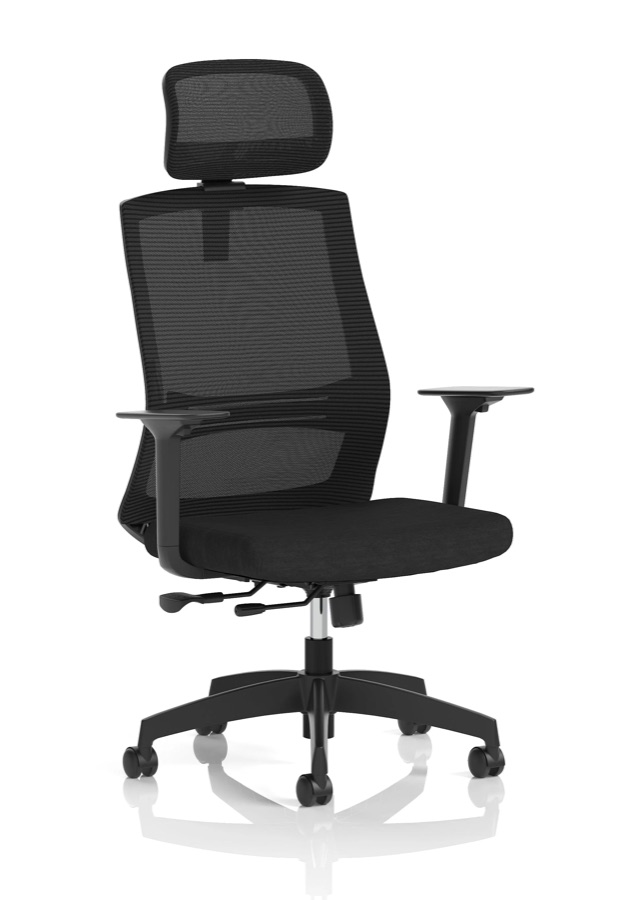 Ventra Mesh Back Task Operator Office Chair Height Adjustable ArmsVEN-MESH-BLK | Imported |
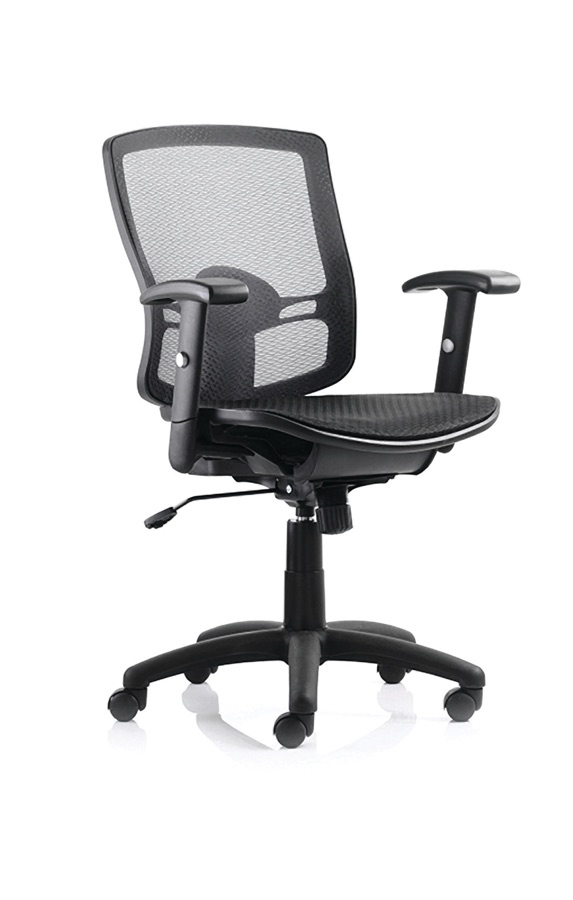 Portland All Mesh Task Operator Chair With Height Adjustable ArmsPOR-MESH-BLK | AvailableImported |
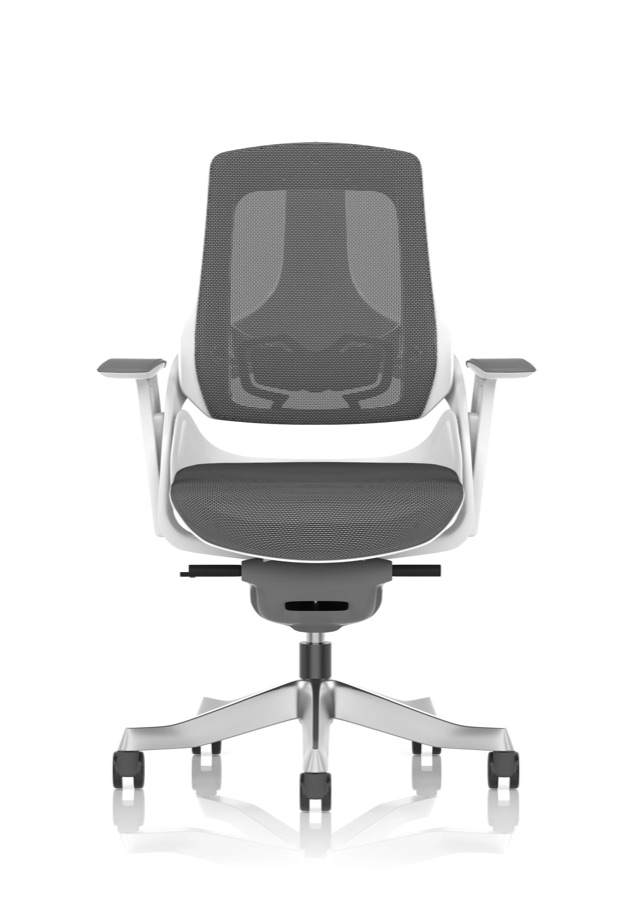 Zure High Back White Shell Mesh Executive Office Chair with ArmsZUR-EXEC-WHT | Imported |
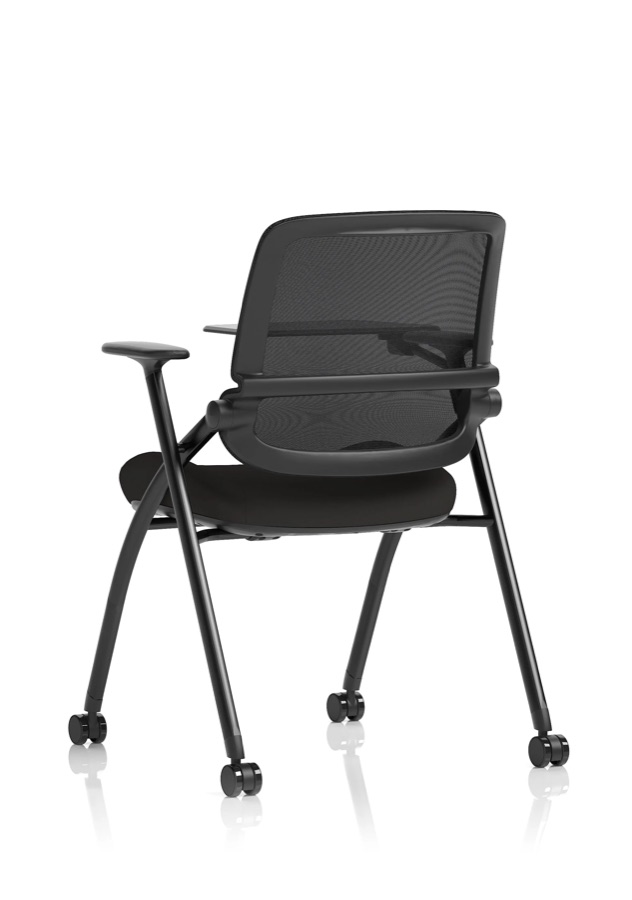 Capra Mesh Back Folding Office Training Chair With Sliding ArmsCAP-FOLD-BLK | Available |
Questions people ask about AI dropshipping
What is AI dropshipping?
Dropshipping with the admin done by software: the supplier’s catalogue imported automatically, prices set by rule, stock mirrored from the supplier, orders routed to them without re-keying, and an AI assistant drafting the titles, descriptions and answers. The business model is unchanged, and so are your legal duties as the retailer.
Is AI dropshipping legit, or a scam?
The method is real and the software works. The scam, where there is one, is the course or the “done-for-you AI store” that promises passive income. AI removes hours of typing; it does not remove competition, thin margins or the need to choose good suppliers. Treat it as a cheaper way to run a shop you would have run anyway.
Can AI run a dropshipping shop on its own?
No, and you would not want it to. It can run the import, the pricing rule, the stock sync, the purchase orders and the first draft of every piece of copy. Choosing what to sell, choosing suppliers, approving anything that moves money and handling an upset customer stay with you, and the output still needs reading on anything that matters.
How much does it cost to start AI dropshipping in the UK?
On Orbit the platform is £25 a month on Solo, or £19 a month billed yearly, with the supplier directory, purchase orders, stock mirroring, pricing rules and Nebula included, and no fee added to a purchase order. Every plan starts with a 14-day free trial, no card required. Budget separately for samples, a domain and your first marketing, which we itemise in how much it costs to start dropshipping in the UK.
Do I need ChatGPT or Claude to use AI with Orbit?
No. Nebula is built into the dashboard on every plan and needs no setup. Connecting Claude or ChatGPT is an option for people who already run their work from one of them, and it costs nothing extra on the Orbit side; check your assistant’s own plan for its connector rules.
Which AI dropshipping tools do I still need?
Fewer than the tool guides suggest. If the platform imports, prices, syncs stock and routes orders itself, and the assistant writes the copy and answers your data questions, what is left is product research, which is a judgement call you can make with free sources, and advertising, where an AI can draft variants but you set the budget cap. Add a tool only when a number on your dashboard says you need it.
If you are weighing up Orbit, run the worked example before you decide. Connect a real supplier, import ten products, write one pricing rule and ask Nebula for the titles and descriptions, then count how many you had to fix. That count will tell you more than this page can. The 14-day free trial gives you a shop to do it in, with no card required: start free.