Gift cards are the most underused thing in most small shops, and the reason is that they sound like admin. They are actually two good things wearing one name.
The first is cash flow. A gift card gets paid for now and redeemed later, sometimes months later, sometimes never. Money arrives before the stock goes out of the door, which is the opposite of how retail normally treats you.
The second is a new customer you did not pay for. Somebody who likes your shop hands your brand to a friend, with money already attached. That friend arrives with a reason to look properly. If you have ever worked out what it costs to acquire a customer through advertising, this one is free, and it comes pre-endorsed by someone they trust.
How they work
You can issue a card by hand for any value, so £17.50 is as valid as £25 if that is what somebody wants. Cards sold in your shop come in the amounts you set up. You can attach a note to it, which is what turns a code into a present.
At checkout the recipient enters the code. When the balance covers the order, the card pays for it, and whatever is left stays on the card for next time.
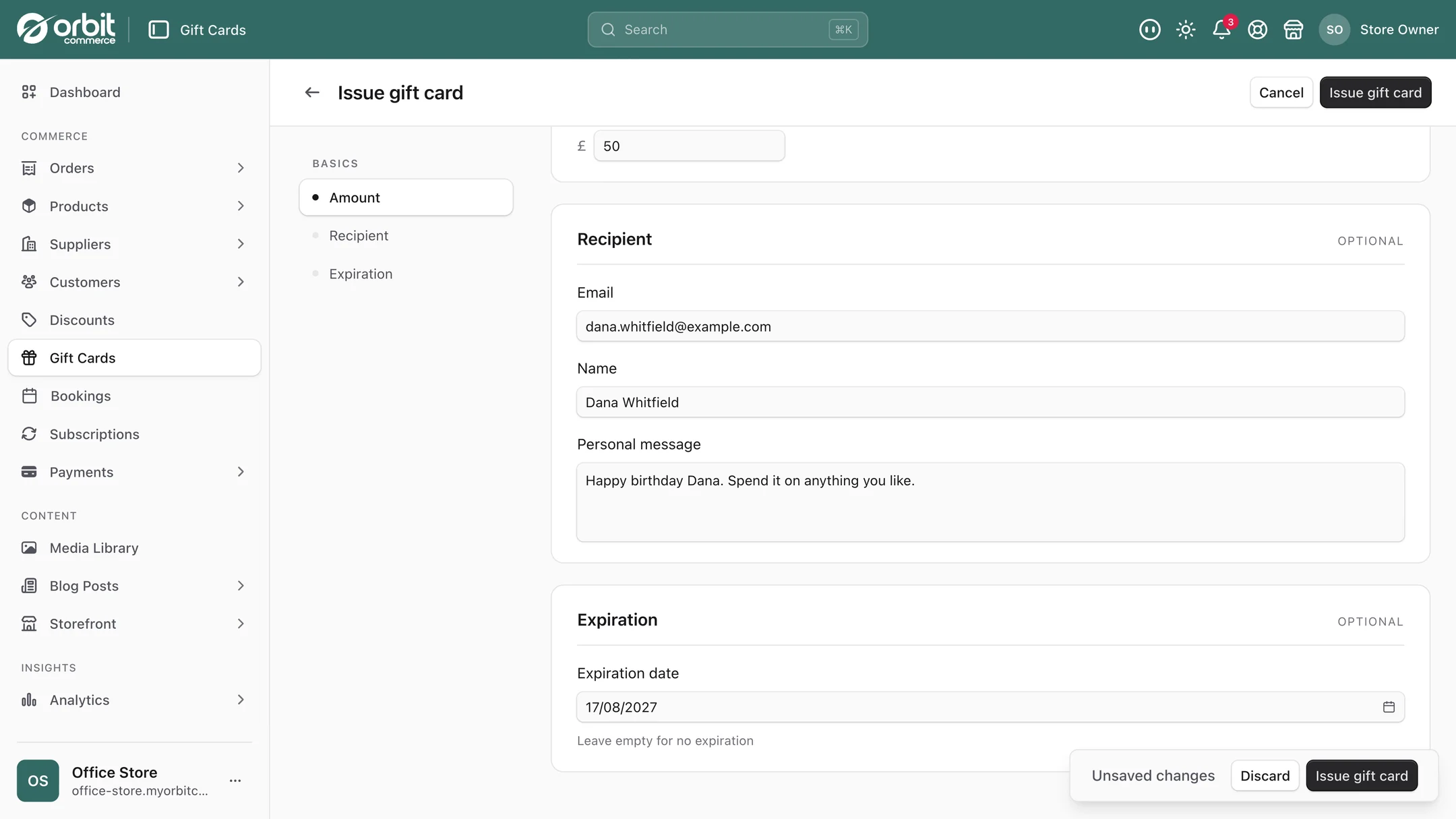
That leftover balance matters commercially. It is a reason to come back, and a customer returning to spend £4.50 usually does not spend £4.50.
Four statuses, and no mysteries
Every card is in one of four states: active, inactive, expired, or depleted. Cards move between them on their own as they get spent or run out of time, so there is nothing to reconcile by hand.
You can deactivate a card from the dashboard and re-enable it later, which sounds dull until the day someone tells you a code was forwarded to the wrong person, or a card was bought fraudulently. Being able to freeze one specific card without touching anything else is the difference between a five minute problem and a bad afternoon.
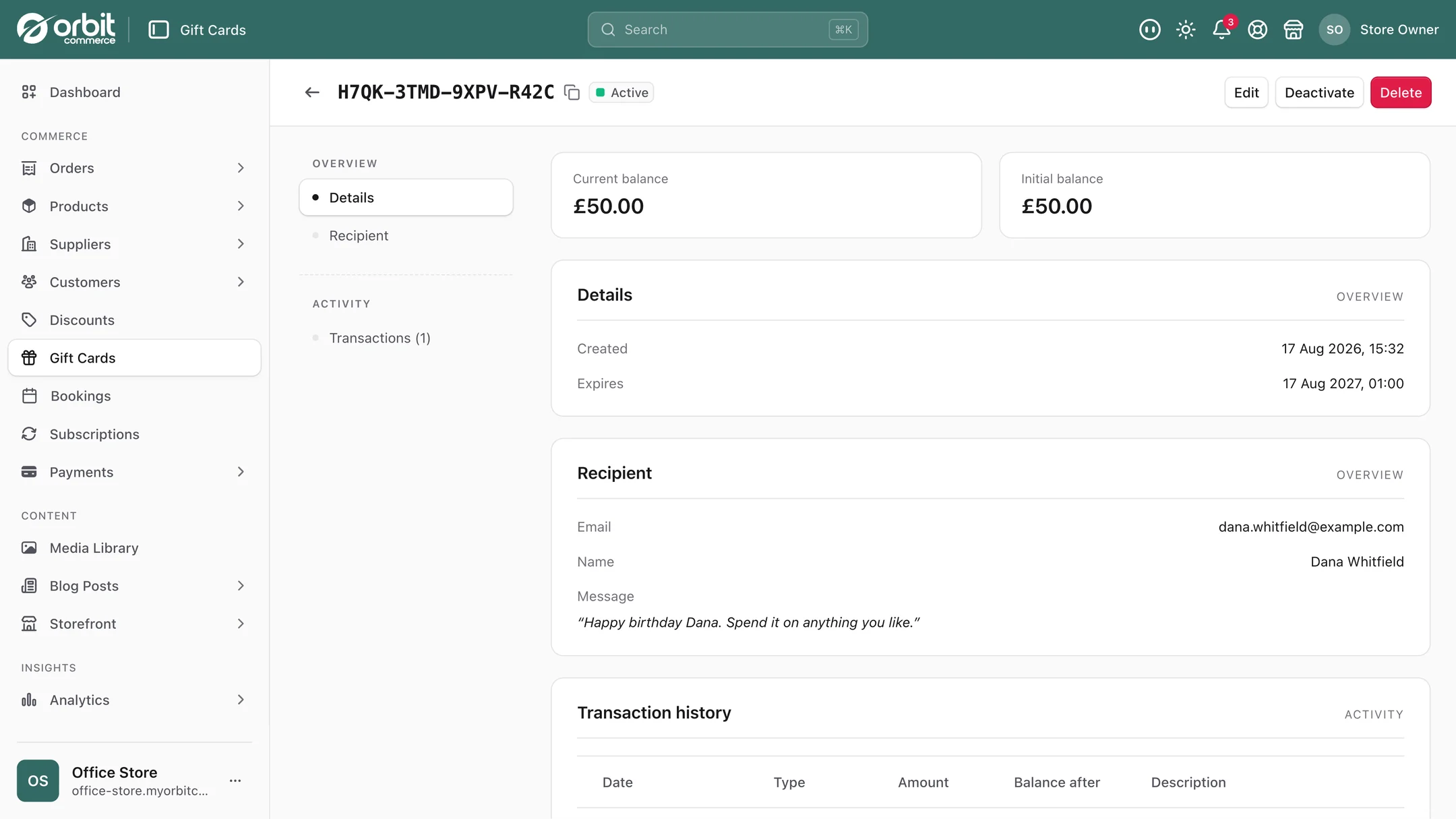
Knowing what you owe
An unspent gift card is a promise to hand over goods later. Accountants call that a liability, and it is worth being able to see it, especially if you sell a lot of them at Christmas.
Orbit tracks the numbers that matter: total issued, outstanding balance, redemptions, and how many cards are expiring soon. Outstanding balance is the unspent value across your cards, so you are not estimating it. Customers see their own remaining balance when they enter the code at checkout.
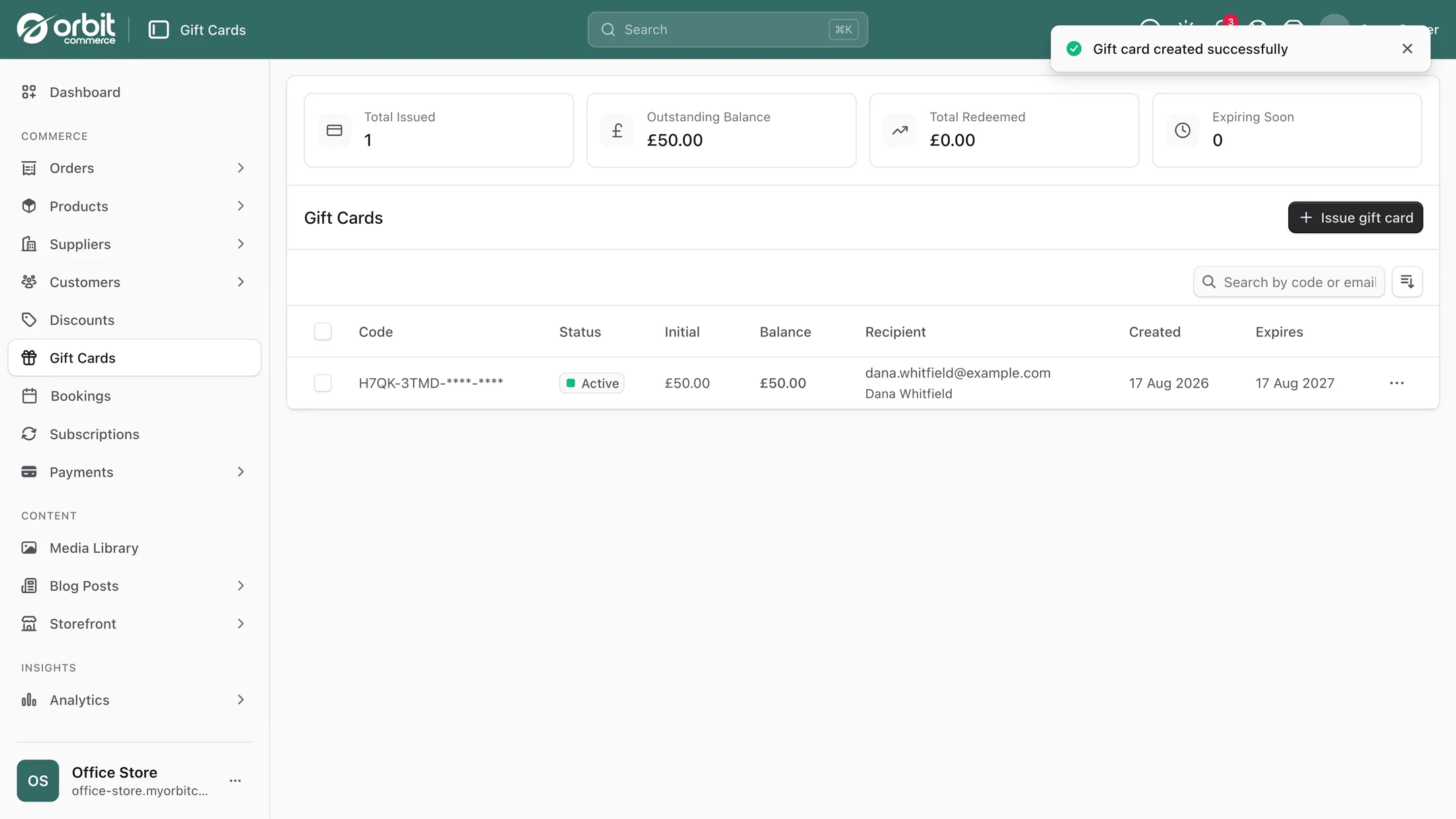
The expiring soon count is quietly the most useful. A card about to expire is a customer about to be disappointed, and a short "you have £30 with us, and it runs out at the end of the month" email is one of the highest-converting things you will ever send.
What shops actually use them for
The obvious one: presents. Especially for anything where size, colour or taste makes buying for someone else risky. Jewellery, clothing, art, anything made to order. The gift card removes the guess.
December cash flow. Gift card sales peak in the last two weeks of the year and get redeemed in January and February, which is exactly when small retail is quiet and cash is tight. That timing is a genuine gift to your business.
Making a complaint right. When an order arrives damaged or late, "here is £15 to spend with us" lands better than an apology, and better than a refund, because it keeps the relationship going. Issue it in thirty seconds without touching the original payment.
Prizes and collaborations. Competitions, partnerships, thanking someone who sent you customers. A gift card is a clean, trackable way to give value that costs you margin rather than cash.
Corporate and staff gifts. Businesses buying for teams want one invoice and a stack of codes. That pairs well with company accounts if it becomes a regular line.
Setting them up
- Decide your values. Offer a few sensible options such as £25, £50 and £100. Too many choices slows people down.
- Decide on expiry. Longer is kinder and generates less resentment. Whatever you choose, say it clearly at the point of purchase.
- Write the delivery moment. The email carrying the code is a brand moment. Make it look like a present rather than a receipt.
- Put them where people look. A gift card nobody can find sells nothing. In your main navigation from November, on product pages for gift-likely items, and in the basket.
- Add a reminder before expiry so nobody loses money they gave you.
- Test one on yourself, including buying something worth less than the balance, so you see the remainder behave correctly.
Good to know
The money is not really yours yet. It is in your account and it is spendable, and it is also a promise. If you sell £4,000 of gift cards in December, do not treat all of it as December profit, because most of it is January stock you have not bought.
Expiry dates need care. Consumer protection rules and general decency both point the same way here, so be generous, be clear about the terms at the point of sale, and warn people before a card lapses. A short expiry period will earn you a review you do not want.
They are not a discount strategy. A gift card is stored value, not a promotion. If you want to run offers, that is discounts, which behave differently and are accounted for differently.
Questions people ask about gift cards
Can I cancel or freeze a gift card that has been misused?
Yes. Cards can be deactivated from the dashboard and re-enabled later if the situation resolves. Every card is in one of four states, active, inactive, expired or depleted, and moves between them automatically as it is spent or as time passes, so freezing one card does not require touching anything else.
How do I know how much gift card money I owe customers?
Outstanding balance is the unspent value across your cards, so you are not estimating it. You can also see total issued, redemptions, and how many cards are expiring soon. Customers see their own remaining balance when they enter the code at checkout.
Are gift cards worth it for a small shop?
For anything people buy as presents, usually yes, for two separate reasons. You are paid before the goods leave, which helps cash flow, particularly since sales cluster in December and redemptions land in the quiet weeks afterwards. And each card puts your brand in front of somebody who has never bought from you, recommended by someone they trust, with money already attached.
The short version
Gift cards are paid in advance and redeemed by someone new. Offer a few sensible values, be generous with expiry and warn people before it arrives, make the delivery email feel like a present, and put them somewhere findable before December rather than during it. Then remember that the balance sitting in your account is stock you still owe somebody.
What this saves you buying
On most platforms the things above arrive as separate paid apps. On Orbit they are part of the plan.
| What you would otherwise buy | The cost elsewhere |
|---|---|
| A gift card app | a monthly bill on top of your plan |
| A store credit or loyalty-credit app | another monthly bill |
| Paper vouchers and a notebook | the ones you forget about |