Most discounting loses money, and it loses it quietly, which is why it keeps happening.
The mechanism is simple. You run 20% off. Sales go up. It feels like a success. What actually happened is that a large share of the discount went to people who were going to buy anyway, at full price, and the rest brought forward sales you would have made next month. You end the week busier, with less money.
This is not an argument against discounting. It is an argument for putting conditions on it, so the offer changes behaviour rather than simply lowering your prices. All the interesting controls are in the conditions.
The kinds of offer
Percentage off. Any percentage off the whole order. Feels generous on cheap items and gets expensive fast on dear ones, which is why the ceiling below matters.
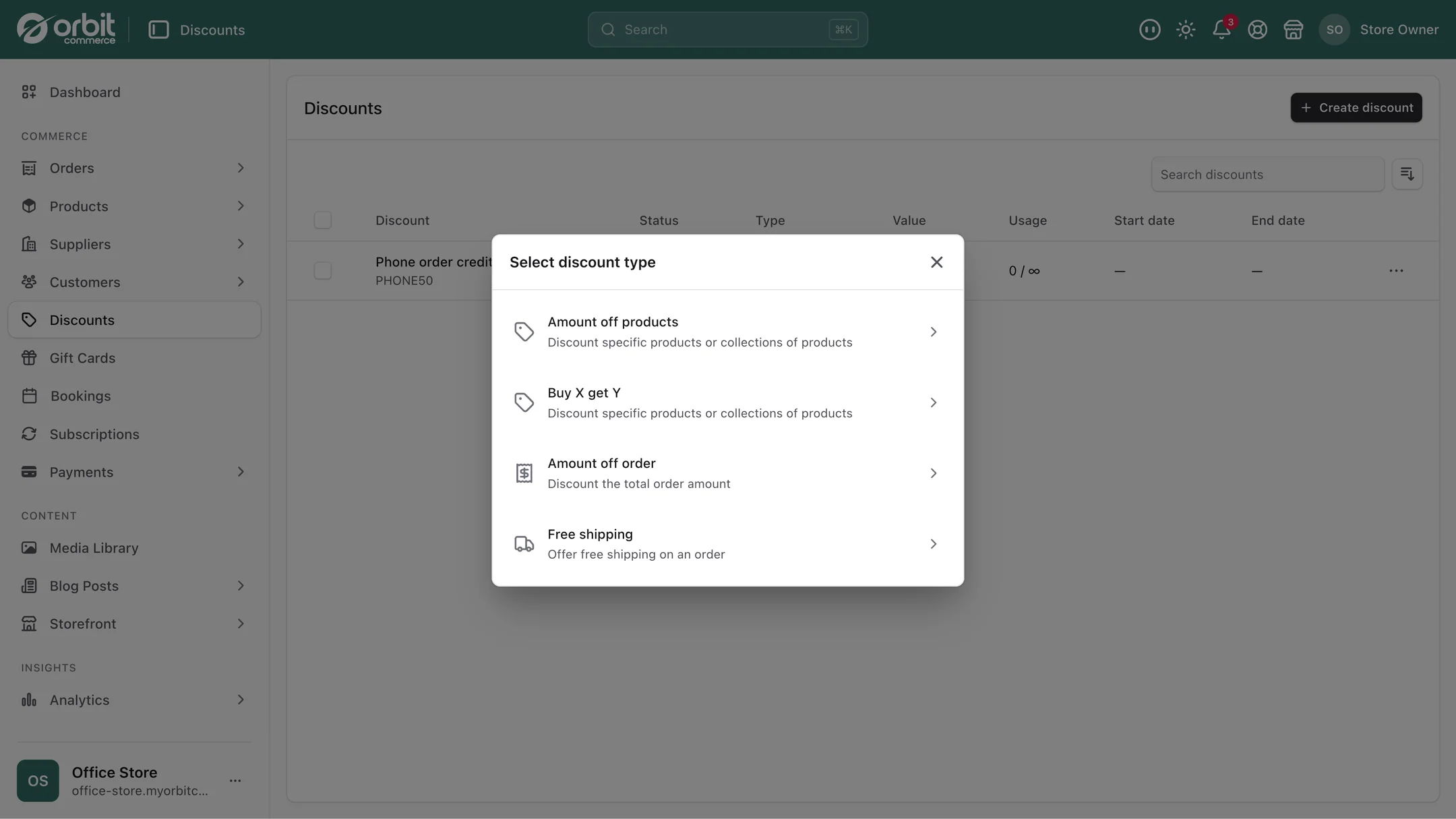
Fixed amount off. £5, £25, whatever you pick, off the whole order. Predictable, which makes it easier to protect margin. Good for loyalty rewards and for making something right when an order goes wrong.
Free shipping. Waive delivery instead of cutting the price. Often the best value offer you can run, and the most underrated. It feels substantial to the customer, it costs you a known amount rather than a percentage of everything, and paired with a minimum spend it frequently pays for itself in bigger baskets.
The controls that decide whether it works
These are the actual product, not the percentage.
Minimum spend. The single most useful control there is. It stops you discounting a £5 order and it pulls baskets upwards. Set it slightly above your current average order value, not below, or you are just giving away margin on orders you already had.
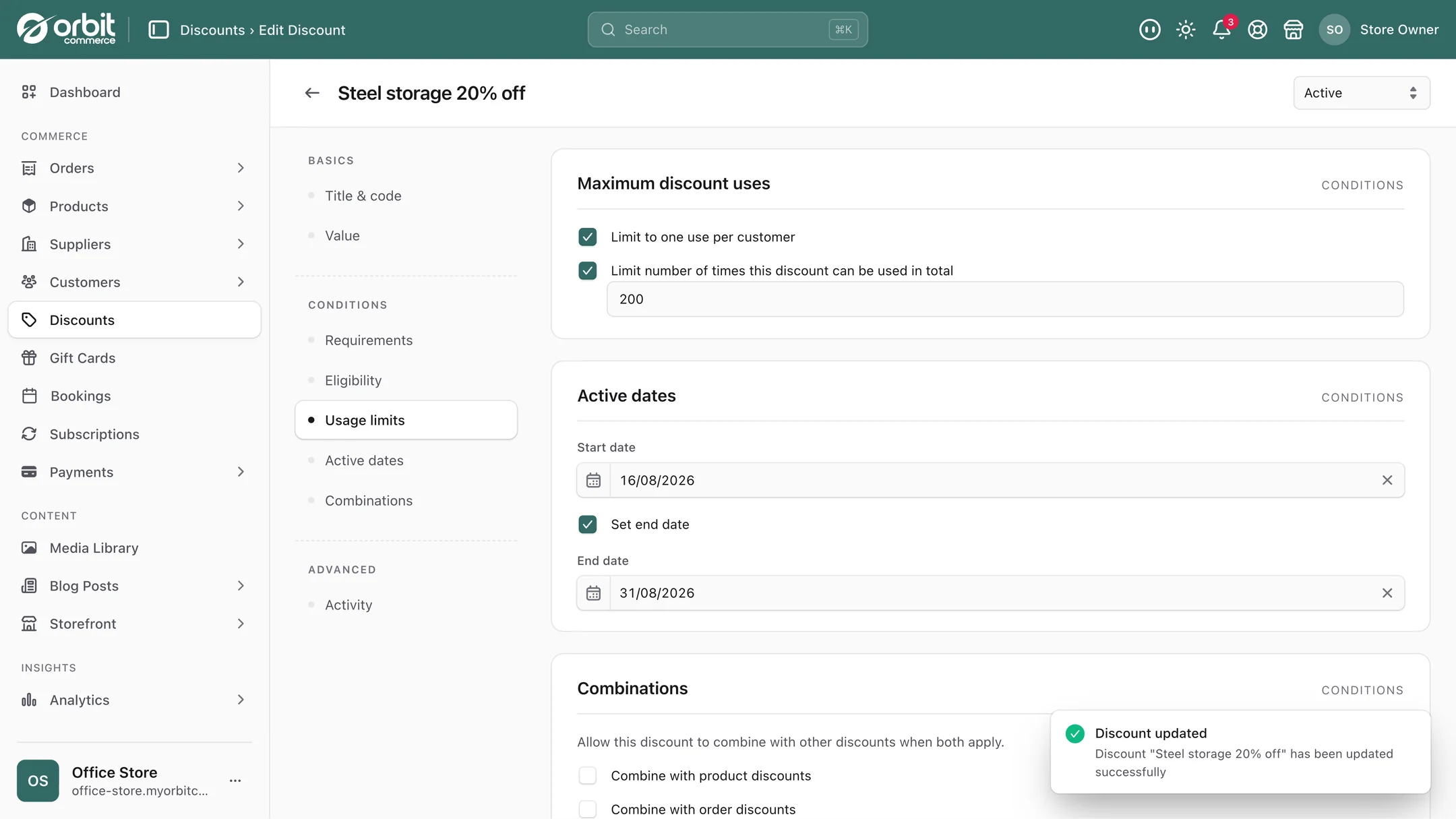
Maximum discount cap. Put a ceiling on a percentage offer: 20% off, up to £30. Generous on a £40 order, sane on a £400 one. Without this, one unusually large order can eat the entire profit of a campaign. If you take one thing from this guide, take this one.
Usage limits. Cap total redemptions, or limit to one use per customer. When a code hits its ceiling it switches itself off, so you are not watching a dashboard at three in the morning during a sale that went further than you expected.
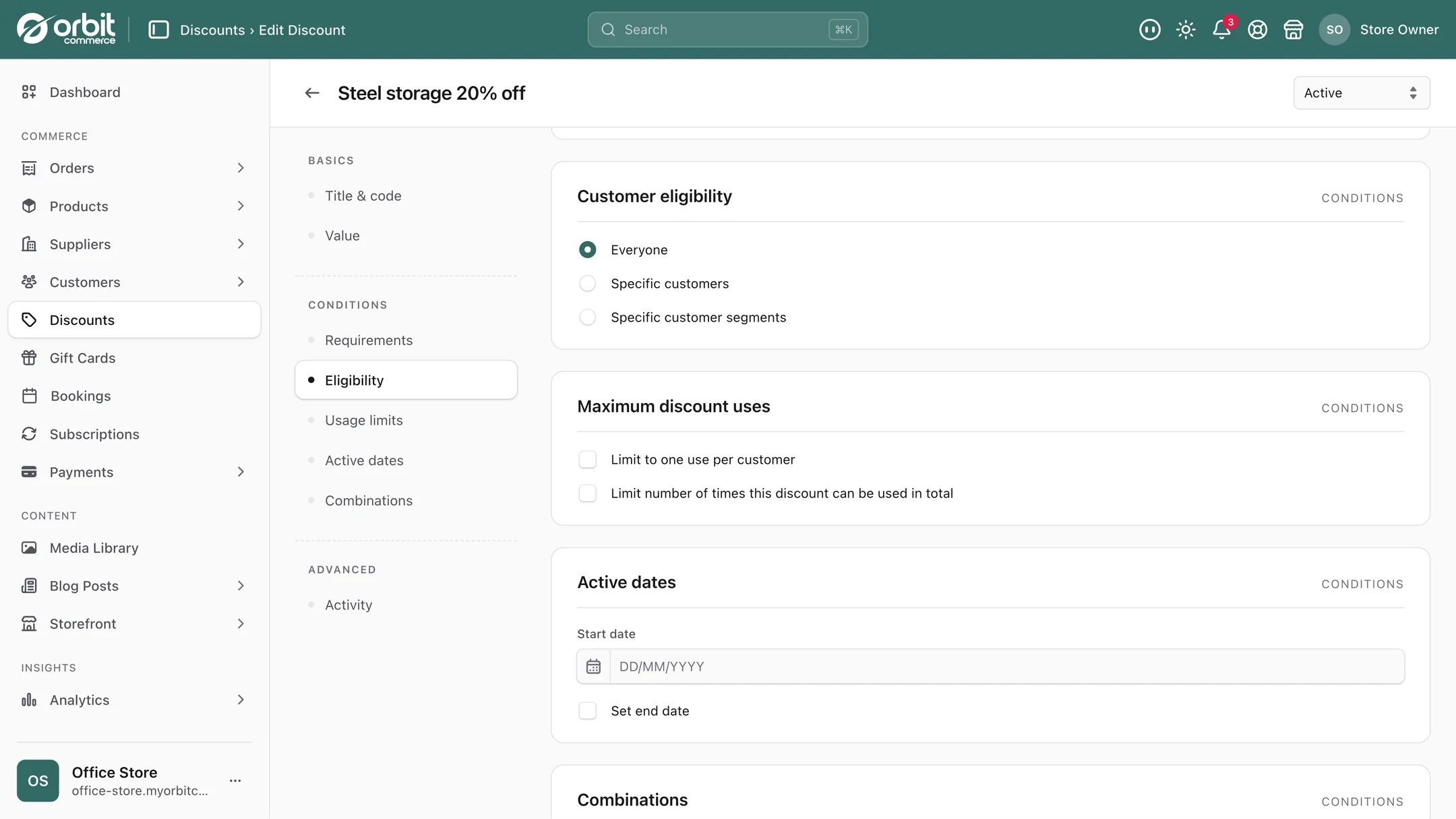
Customer eligibility. Open to everyone, or restricted to specific customers you choose. This is how a VIP code stays with your VIPs instead of appearing on a voucher aggregator within a day.
Start and end dates. Offers should expire on their own. A code with no end date will still be working in two years, and someone will find it.
Offers worth running
Free delivery over your target basket size. The most reliable basket-raiser in retail. Set the threshold above your average order and tell people in the basket how much more they need. Build the postage side of it properly in shipping rules.
Capped percentage for a seasonal sale. 20% off up to £30. Keeps the headline attractive and stops a handful of large orders wiping out the maths.
A fixed amount with a minimum spend. £10 off orders over £60. Easier for customers to reason about than a percentage, and your cost is a known number rather than a proportion of whatever they happen to buy.
A restricted VIP code. Limited to chosen customers, one use each. Rewards your best buyers without becoming a public discount.
A make-good. A fixed amount, one use, for the customer whose order went astray. Faster than a partial refund and it keeps the relationship going. A gift card does a similar job when the goodwill needs to be larger.
The discipline nobody enjoys
Before running an offer, work out what it costs when it works. Take your typical order, apply the discount, subtract your product cost, card fees and postage. If the remaining number is uncomfortable at your normal volume, it will be much worse at promotional volume, because you will be selling more of them.
And be honest about the counterfactual. The right question is not "did we get orders", it is "did we get orders we would not otherwise have had". A site-wide code emailed to your existing customer list mostly discounts sales that were already coming.
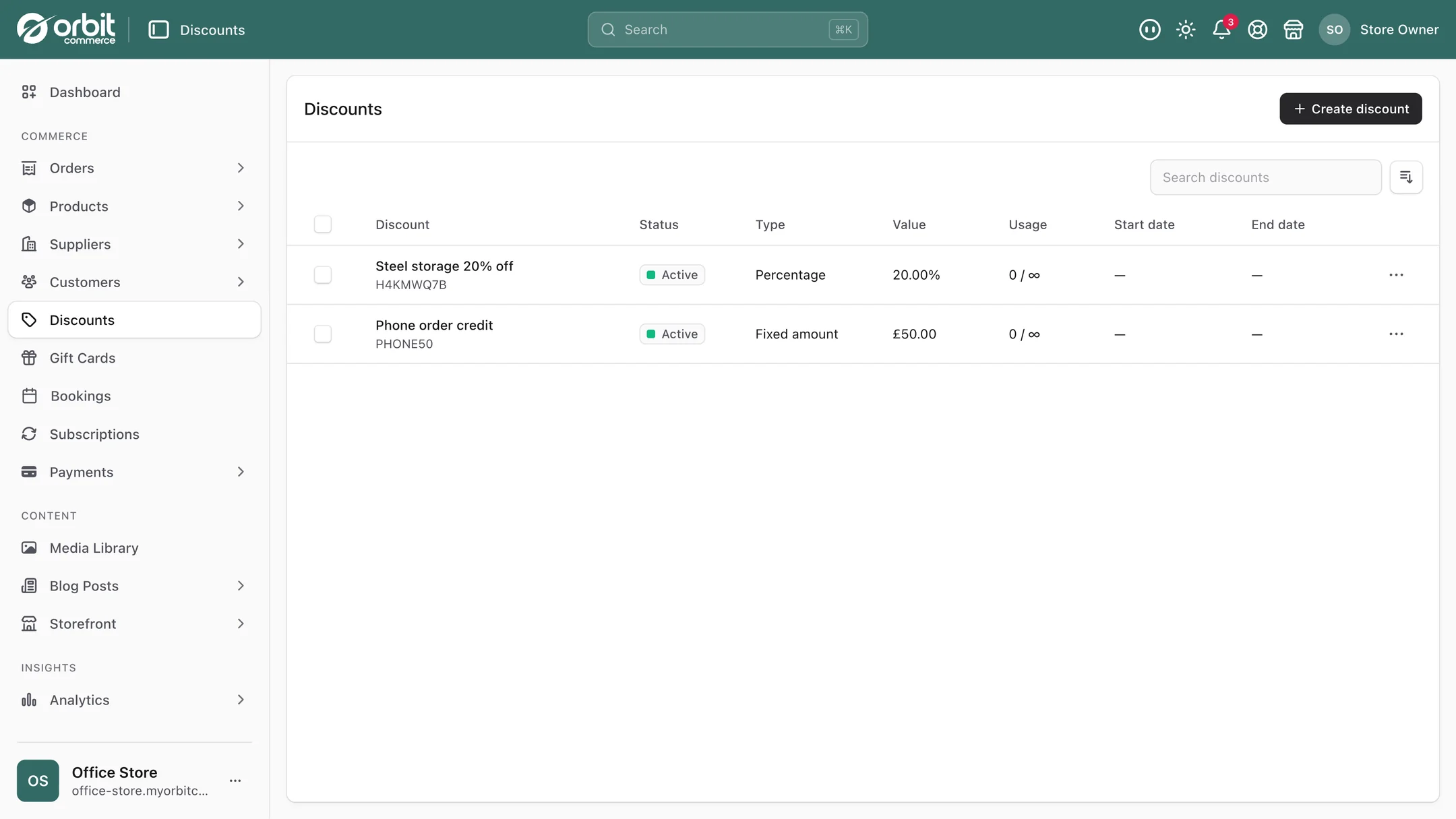
Two things reduce that leakage. Put conditions on the offer so it has to change behaviour to trigger. And point offers at people who have not bought, rather than the ones who buy anyway.
Good to know
Discounting trains customers. Run a sale every month and your regulars will simply stop buying between sales. The full price becomes a suggestion. This is slow damage and it is very hard to reverse.
Fix the listing before the price. If something is not selling at £40, the photography, the description or the audience is often the problem rather than the price. Discounting it is the expensive way to find that out.
Codes escape. Anything sent to more than a handful of people ends up on a voucher site. Customer eligibility restrictions and usage caps are your defence.
Questions people ask about discounts
How do I stop a percentage discount costing too much on large orders?
Set a maximum discount cap. An offer of 20% off up to £30 is generous on a £40 order and sane on a £400 one, so a handful of unusually large baskets cannot eat the profit from the whole campaign. It is the single most valuable control on a percentage offer, and the one most often left blank.
What discount actually increases order value?
Free delivery above a minimum spend, reliably, provided the threshold sits above your current average order value. It feels substantial to the customer, costs you a known amount rather than a proportion of everything, and gives people a concrete reason to add one more item.
How do I stop discount codes leaking onto voucher sites?
Restrict eligibility to specific customers so a VIP code only works for VIPs, cap total redemptions so a leaked code switches itself off when it hits the ceiling, limit it to one use per customer, and always set an end date. Codes sent to more than a handful of people will escape eventually, so the defence is limits rather than secrecy.
Are discounts bad for a small shop?
Untargeted ones usually are, because much of the money goes to customers who would have paid full price. Discounts with conditions are different, because the customer has to do something they were not already doing to earn them, such as spending more. The risk to watch is frequency: run sales every month and regulars learn to wait for them, and your full price stops being real.
The short version
Put a condition on every offer so it has to change behaviour to trigger. Set a minimum spend above your current average order value, always cap percentage discounts, always set an end date, and restrict anything meant for VIPs. Free delivery over a threshold is usually the best-value offer you can run. And do the arithmetic on what the promotion costs when it succeeds, not when it fails.
What this saves you buying
On most platforms the things above arrive as separate paid apps. On Orbit they are part of the plan.
| What you would otherwise buy | The cost elsewhere |
|---|---|
| A discount or promotions app | a monthly bill on top of your plan |